






Understanding the link between heart disease and oral health
by TongueclearOfficial on Feb 06 2026
Oral health and heart disease are linked. The World Heart Federation has stated that people with poor oral health have a higher risk of cardiovascular diseases such as heart disease or stroke. If you have any questions about this, please read this guide.In this guide, we will explain the link between heart disease and oral health, the sources behind this link, and how to prevent it. This information will help you protect your oral health in the years to come.

Because a thin membrane called a "biofilm" exists in the mouth. Periodontal bacteria within this biofilm continuously produce inflammatory factors and metabolic products (such as enzymes and toxins). These substances can: stimulate the gum immune response, damage gum capillaries and epithelial cells, leading to inflammation and swelling of the gum tissue.
When the gums are chronically irritated, capillaries rupture, causing minor bleeding; epithelial cells also break down, forming small wounds. Periodontal bacteria enter the bloodstream through these wounds. These bacteria and inflammatory factors trigger vascular inflammation and may even participate in the formation of arterial plaques. Over time, the accumulation of vascular problems increases the risk of heart disease. This is why periodontitis is linked to the risk of heart disease.

Biofilm is a thin, viscous film composed of microorganisms (mainly bacteria) that adheres to various surfaces in the oral cavity, such as teeth, gums, jaws, lining, and tongue.
Biofilm provides a protective "home" for bacteria, making it difficult to completely remove with daily brushing alone. It also makes it easier for bacteria to evade the body's defense mechanisms, and even antibiotics are less effective.
Because the warm, moist environment of the mouth is ideal for bacterial growth, biofilm forms naturally. While some oral bacteria are beneficial, harmful bacteria in biofilm, if left unchecked, can lead to serious dental problems and even systemic effects, such as heart disease.
Biofilm begins to form within hours of brushing, and over time, if not properly managed, it hardens into plaque (dental tartar).

Because biofilm forms not only on teeth but also on gums, jaws, the inside of the mouth, and the tongue, brushing alone cannot completely remove it. This is why more and more oral hygiene solutions emphasize full-mouth cleaning.
If the problem is "distributed throughout the mouth," then the cleaning method itself must be able to cover the entire oral cavity structure simultaneously. Following this line of thought, a cleaning method that wraps around teeth and conforms to the oral cavity is being adopted by more and more people.
Tongueclear's new method for removing full-mouth biofilm:
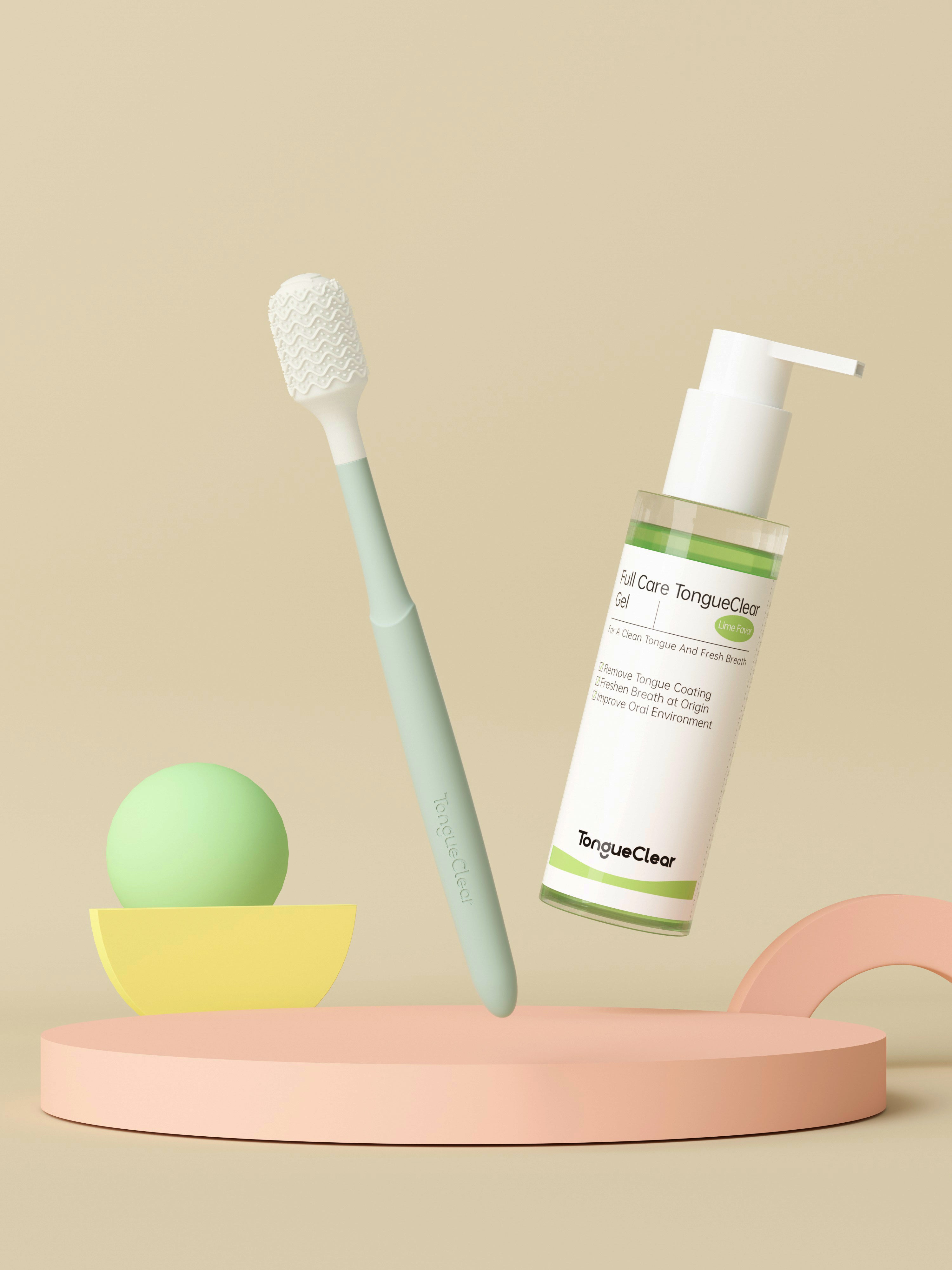
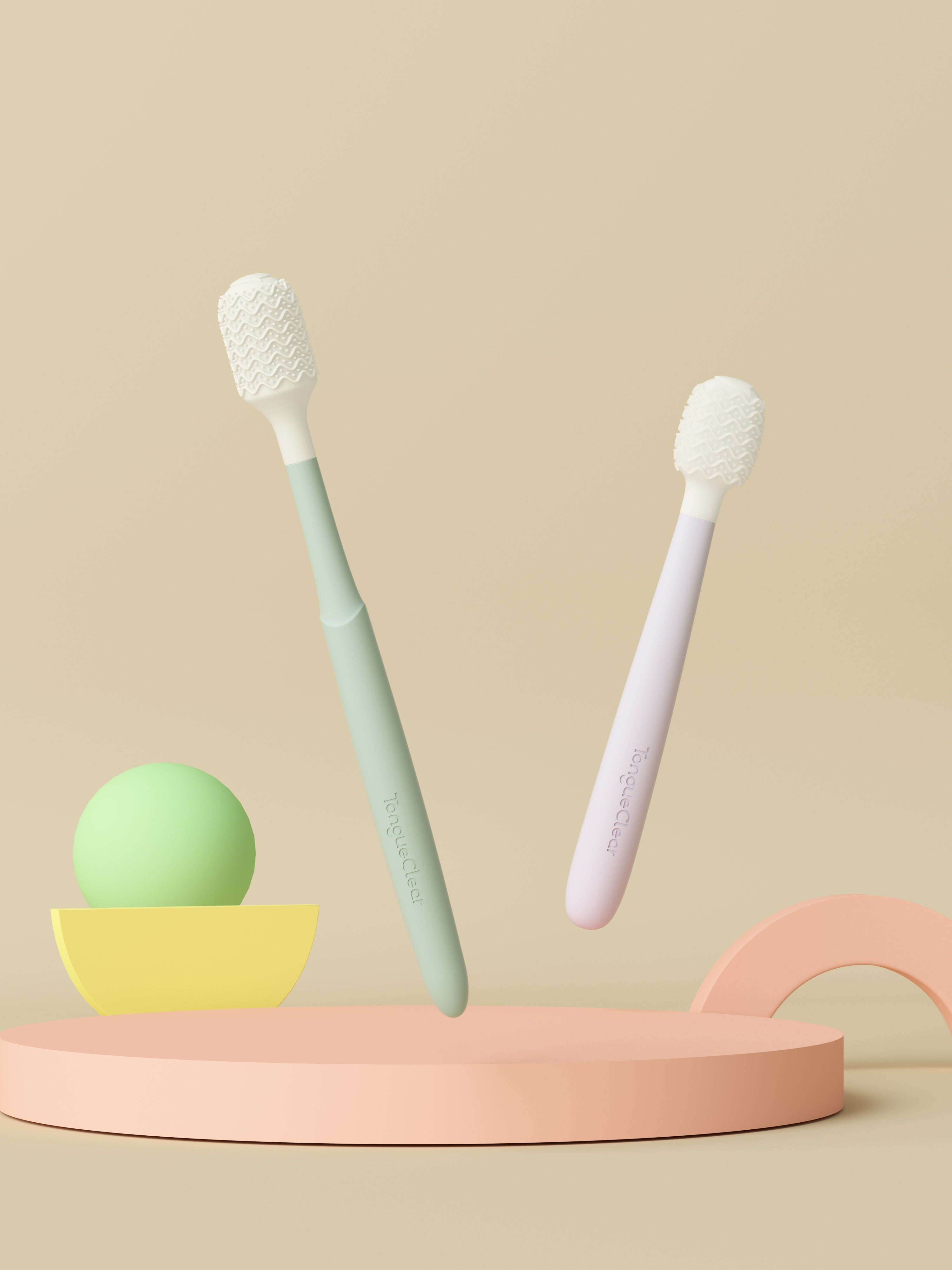
* Unique Adaptive Technology: Tongueclear's oral cleaning airbag brush head can change shape to fit different parts of the mouth. The flexible handle can rotate 360° with the brush head, perfectly conforming to the contours of teeth, gums, jaws, the inside of the mouth, and the tongue.
* Multi-Layer Oral Adaptive Wave Structure: The multi-layered 3D wave-textured airbag brush head, while adaptively conforming to the oral cavity structure, can contact and encapsulate biofilm and residue in layers, removing them from teeth, gums, and other complex oral surfaces through a gentle physical cleaning method.
Gentle and highly effective bio-enzymatic hydrolysis technology: Tongueclear gel toothpaste contains no irritating chemicals (SLS, alcohol, and fluoride). Its main ingredients are lysozyme and amino acid surfactants, which can destroy the key structures and sticky matrix structures of harmful bacteria, making biofilm easier to remove with a mouth brush. When biofilm is truly removed from the entire mouth, the gums are no longer repeatedly damaged, and the risk of oral bacteria entering the bloodstream naturally decreases.
When we begin to re-examine oral health from the perspective of "holistic health," we find that problems often lie not in a single tooth, but in the entire oral environment. Biofilms are worth mentioning repeatedly because they don't just stay on the tooth surface; they exist long-term in the gums, tongue, upper and lower jaws, and the inner walls of the mouth, continuously creating inflammation and micro-damage, providing conditions for bacteria to enter the bloodstream. Truly effective oral cleaning is therefore no longer just about "brushing teeth clean," but about reducing the persistent presence of biofilm throughout the mouth, helping the oral cavity return to a more stable state. Tongueclear offers a full-mouth cleaning solution based on this logic—using physical cleaning methods that conform to the oral structure, combined with gentle enzymatic support, to help the body reduce the long-term burden caused by oral biofilms from the source. Some health problems seem to occur deep within the body, but their true starting point is often in the places most easily overlooked every day.
[1] WHF welcomes WHO’s resolution on Oral Health
[2] Chopra, A et al., A.et al.Exploring the presence of oral bacteria in non-oral sites of patients with cardiovascular diseases using whole metagenomic data.Sci Rep14, 1476 (2024).
[3] Biofilm concept from Wikipedia, the free encyclopedia
[4] Pokharel K et al., Role of Biofilm in Bacterial Infection and Antimicrobial Resistance. JNMA J Nepal Med Assoc. 2022 Sep 1;60(253):836-840.