




What Really Causes Bad Breath and How to Care for It
by TongueclearOfficial on Jun 25 2026


Breath concerns can come in different forms. But the kind that creates real social discomfort, and that others can actually notice, is usually true bad breath. And in most cases, the source is inside the mouth itself,
not “internal heat,” and not simply a “body constitution” issue,
but oral biofilm and tonsil stones.
Before looking at how they create odor, it helps to understand what they are made of, where they tend to appear, and what they look like.

1. Oral biofilm is formed from bacteria, saliva components, and a sticky matrix. This structure helps bacteria stay attached more easily.

2. In the early stage, biofilm often appears as a clear or semi-clear sticky layer and may not be easy to see. If it is not cleaned regularly, it may become thicker and look whitish or yellowish.

3. It can attach to teeth, gums, the tongue surface, the palate, inner cheeks, and other soft-tissue surfaces inside the mouth.

1. Tonsil stones are often formed from food debris, shed cells, mucus, anaerobic bacteria, and mineral deposits. Over time, this mixture may gradually calcify into small particles.

2. Tonsil stones are usually white or pale yellow, often about the size of a sesame seed or millet grain. They are relatively soft and may release a strong rotten odor when crushed.

3. Tonsil stones hide in the tonsil crypts, the deeper pockets on both sides of the throat that are not easy to see. Regular brushing usually cannot reach this area.
Biofilm attaches to oral surfaces, while tonsil stones hide in crypts. They look different, but both can become sources of ongoing odor.

Oral Biofilm
Oral biofilm contains large amounts of bacteria. Among them, anaerobic bacteria especially like to feed on proteins, particularly sulfur-containing amino acids.
As they break these down, they produce volatile sulfur compounds, ammonia, organic acids, and other substances that can create mouth odor.
This can become more noticeable when issues such as cavities, gingivitis, or periodontal inflammation are present. Bleeding gums and inflammatory fluids can provide more organic material for anaerobic bacteria to break down, increasing sulfur compounds and making breath problems worse.

Tonsil Stones
When biofilm is not thoroughly reduced, biofilm-related bacteria can enter the tonsil crypts, break down food debris and shed cells inside those pockets, continue producing odor, and accelerate the formation of tonsil stones.

Most people choose to mask bad breath with various products, but this offers only a temporary fix.
Masking the odor is never the optimal solution for eliminating bad breath; the real priority is to target the source of the odor.
Once the biofilm adhering to the teeth, gums, palate, inner cheeks, and tongue is removed:
* The population of anaerobic bacteria decreases.
* The production of metabolites resulting from protein breakdown is reduced.
* The sources of the odor are diminished.
Consequently, bad breath can be significantly improved.
Moreover, as the oral environment becomes cleaner and the bacterial load drops,
there is a reduction in food debris and biofilm bacteria entering the tonsillar crypts.
This indirectly improves the "fermentation environment" within the crypts,
thereby lowering the risk of tonsil stone formation and odor production.
While the market offers many products for addressing bad breath, none truly serve as the optimal solution.

As mentioned above, an ideal breath-care routine should not simply cover odor, and it should not irritate the entire mouth with harsh friction.
TongueClear takes a simple approach:
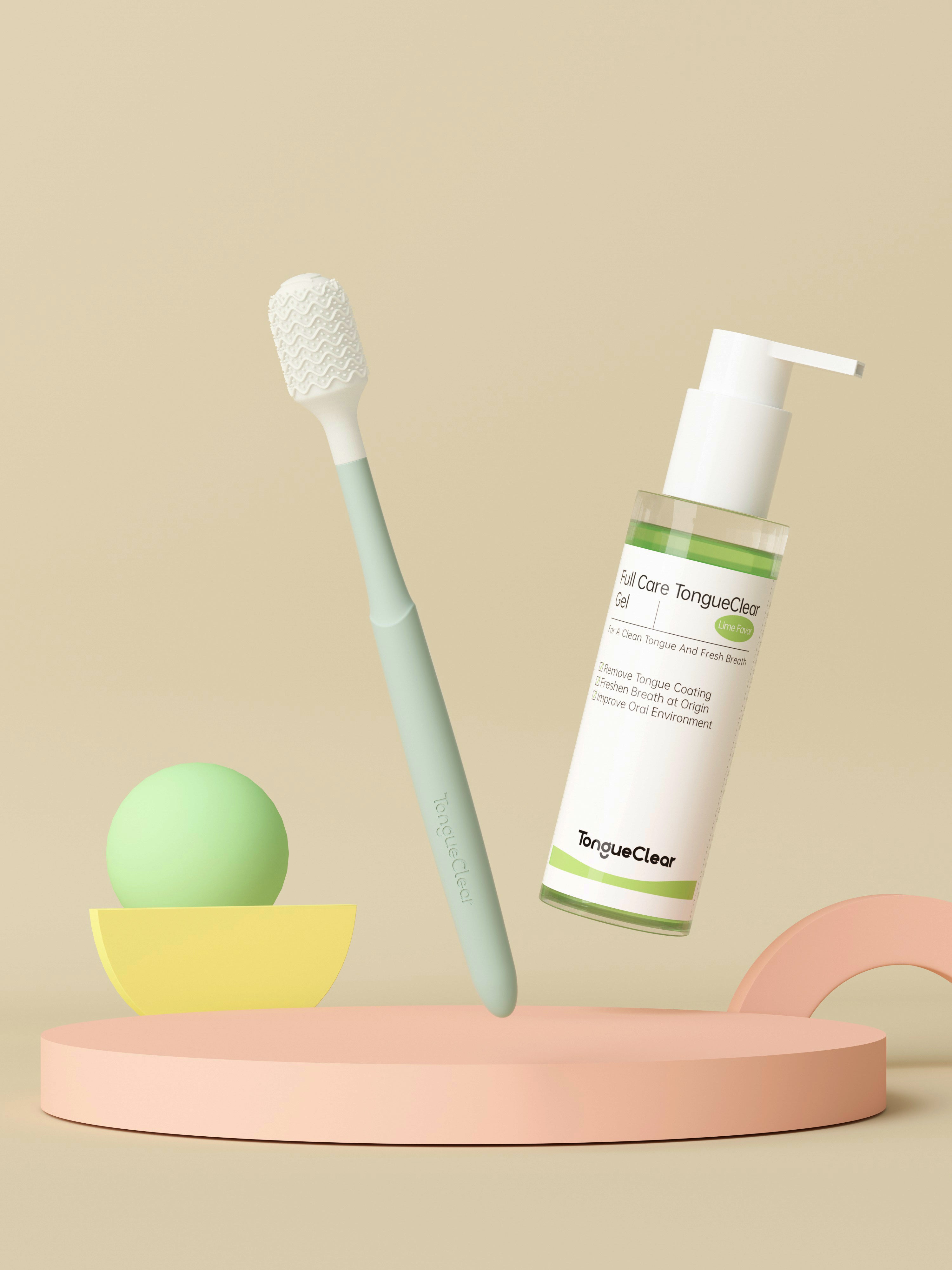
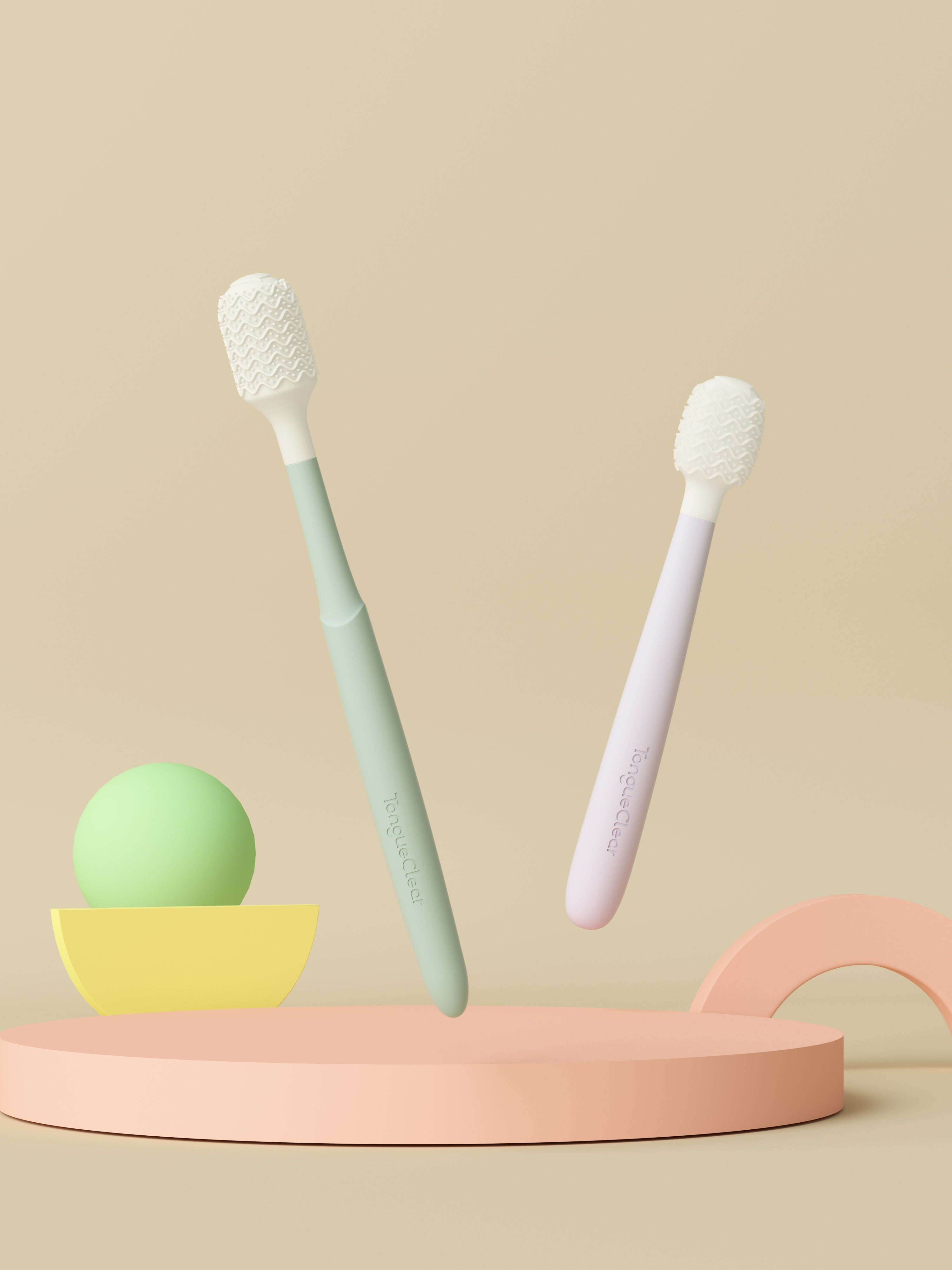
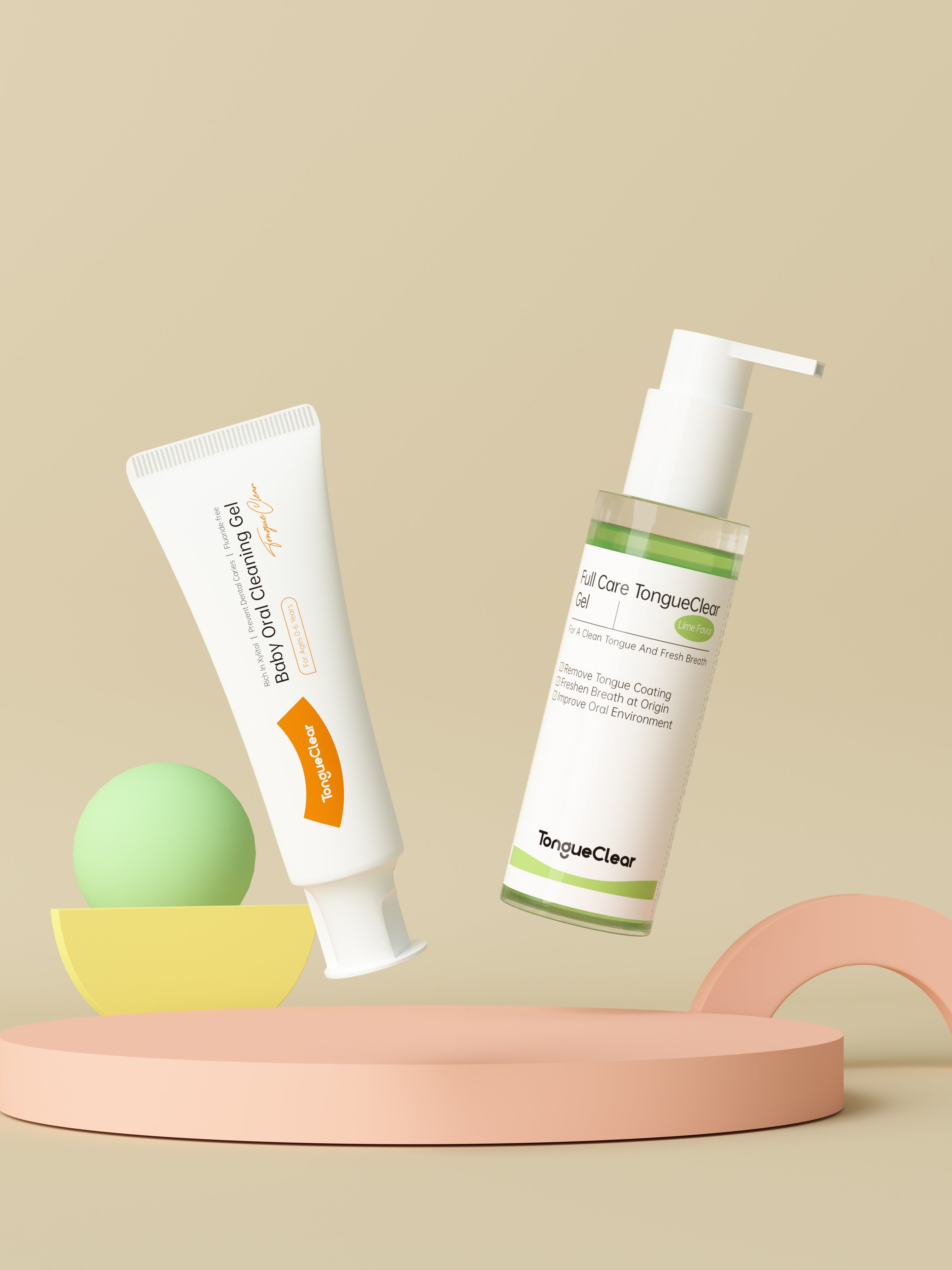
Use a soft, adaptive oral brush with an abrasive-free cleansing gel to help clean the tongue, gums, palate, soft palate, teeth, inner cheeks, inner mouth walls, and other areas.

The mouth is not a flat surface. Teeth have curves, the tongue has texture, and the gums, palate, and inner cheeks all have their own contours.
TongueClear’s flexible brush head adapts naturally to different areas of the mouth:

• Flexibly covers the textured surface of the tongue and under-tongue area;
• Gently follows and wraps along the curve of the gums;
• Adapts to the curve of the palate to clean the upper palate and soft palate;
• Contacts and cleans the inner walls of the mouth with gentle pressure;

Its multi-layer 3D wave texture fits the mouth’s surfaces in layers, using gentle physical cleansing to help remove biofilm from the mouth.

It can also clean the area where the mouth meets the throat, helping reduce the chance of tonsil stone formation at the source.

TongueClear Cleansing Gel follows a bio-compatible approach that works with the body’s natural balance. It does not contain abrasive agents such as hydrated silica, and it is SLS-free. It does not rely on particle friction or harsh stimulation to create the feeling of a “strong clean.” Instead, its targeted synergy formula blends three layers of cleansing and nourishing support:

● Glycosidase & lysozyme
help break down biofilm structure

● Amino acid surfactants
help wrap and carry away loosened biofilm and food residue

● Glycerin and sorbitol
create a smooth, moisturizing gel texture, making contact with the tongue, gums, palate, and inner mouth feel softer.
The entire cleaning process feels gentle and comfortable while reaching areas that are often overlooked, helping clear odor at the source and keeping the mouth naturally fresh.
We recruited 12 participants for our test. To build up biofilm, participants were asked to avoid brushing for 100 hours.

On day five, we first observed the basic biofilm buildup using a biofilm disclosing agent:

Then the 12 participants were divided into four groups of three, with each group using a different oral-cleaning method:
Group 1: brushing only;
Group 2: brushing + tongue scraper;
Group 3: brushing + mouthwash;
Group 4: brushing + TongueClear. Then we compared the cleaning results:

We also collected biofilm samples from the gums, tongue surface, underside of the tongue, inner cheeks, and palate of participants in each group, then observed the samples under a microscope:

We also measured VSC breath values across all four groups:
In this VSC breath-value test, the brushing + TongueClear group reached an odor-reduction rate of 87.15%, noticeably higher than brushing alone, brushing + mouthwash, and brushing + tongue scraper.
The results suggest that when TongueClear is used for oral cleaning, biofilm on the teeth, tongue, gums, upper and lower oral surfaces, and oral soft tissue can be gently removed, and breath can improve noticeably — even participants themselves felt their breath becoming fresher.

After using TongueClear for a while, the change may not be something you notice first.It may be a family member leaning in and casually asking, “Did you just brush your teeth?”Or a friend sitting a little closer during a conversation and saying, “Did you switch toothpaste? Your mouth feels really fresh lately.”They do not know you have been using TongueClear, and they are not analyzing your breath.
Because people close to you usually do not make a point of complimenting your breath. They simply notice that close conversation has fewer awkward pauses.
It is not an overpowering minty blast, and it is not fragrance covering something up. It is a light, clean freshness. After coffee, after eating, or after a long conversation, your mouth is less likely to return to that heavy, sticky feeling.


To help you begin your fresh-breath journey with confidence, TongueClear offers a risk-free guarantee:
• Returns within one month
• Free replacement within one year for non-human-caused damage to the oral brush