




Embarrassed by Bad Breath? The Real Causes and Fixes
by TongueclearOfficial on May 26 2026


Bad breath generally refers to an un-fresh odor emanating from the mouth and its adjacent areas when breathing or speaking. It sometimes stems from diet, daily routines, or oral hygiene habits, but it can also be linked to the buildup of residues in the oral environment.
In daily oral care, persistent breath issues are often more closely related to the local environment of the mouth itself, rather than simply being determined by temporary internal imbalances or your general constitution. Among these factors, oral biofilms and tonsil stones are two that are frequently overlooked. They tend to appear in hard-to-reach areas that standard brushing misses, making fresh breath much harder to maintain.

Understanding what oral biofilms and tonsil stones are, their typical appearance, and what they are made of is key to addressing them.

① A sticky accumulation of bacteria, salivary components, and food debris. Typically found on teeth, gum lines, the tongue, and soft oral tissues.

② Early stage: A clear or translucent, slimy film.
Over time: Thickens and turns white or pale yellow.

③ A microbial network with structural and defensive functions. Formed by oral bacteria secreting a matrix of polysaccharides and proteins. It contains bacteria, saliva, and food particles.

① Small, hardened granules formed by the gradual buildup of debris in hard-to-clean areas near the tonsils.

② Tiny, irregular granules, usually white or pale yellow. They have a relatively loose texture and release a noticeable odor when crushed.

③ A mixture of food particles, oral debris, mucus components, and bacteria. Forms solid granules when salivary minerals deposit and calcify on this mixture.

Oral Biofilm
Think of oral biofilms as a sticky layer that easily traps dirt, bacteria, and food debris. Certain anaerobic bacteria break down protein residues—especially sulfur-containing amino acids—producing odor-related compounds. These impact the freshness of your breath. If the condition of your teeth or gums is suboptimal, residues and secretions accumulate more easily. This provides anaerobic bacteria with more organic matter to feed on, making oral odor easier to notice over time.

Tonsil Stones
When biofilms and food particles aren't cleared away promptly, bacteria and debris can gather in hard-to-reach areas near the tonsils. As they break down food residues and shed oral cells, they produce odor-causing substances that contribute to the formation of tonsil stones.

Gastrointestinal Issues
We swallow between 600 and 1,000 times a day, meaning food residues and biofilm components in the mouth can travel down the digestive tract with our saliva. If oral hygiene is inadequate, these residues can compromise your overall feeling of oral freshness. Meanwhile, post-meal burping, acid reflux, or minor stomach discomfort can make existing oral odors much more noticeable.

Respiratory Issues
Residues and odor-causing compounds trapped in oral biofilms can affect the feeling of freshness in the back of the mouth, the throat, and around the nasal cavity. When these areas become sensitive or produce excess secretions, residues are more likely to linger and contribute to a stale feeling. As you breathe and speak, this odor becomes much more apparent to others.

Many breath-freshening products provide an immediate cooling sensation, but that feeling is usually fleeting. For persistent bad breath, the key isn't just "masking the smell," but achieving a deeper, more comprehensive clean—especially by targeting the biofilms attached to the teeth, gums, roof of the mouth, inner cheeks, and tongue.
When biofilms are cleaned more thoroughly:
As a result, breath freshness may be easier to maintain. Additionally, a cleaner oral environment means fewer food particles and biofilms entering the tonsil crypts, thereby helping manage buildup associated with tonsil stones and odor.
While there are many breath-freshening products on the market, few serve as the optimal solution.


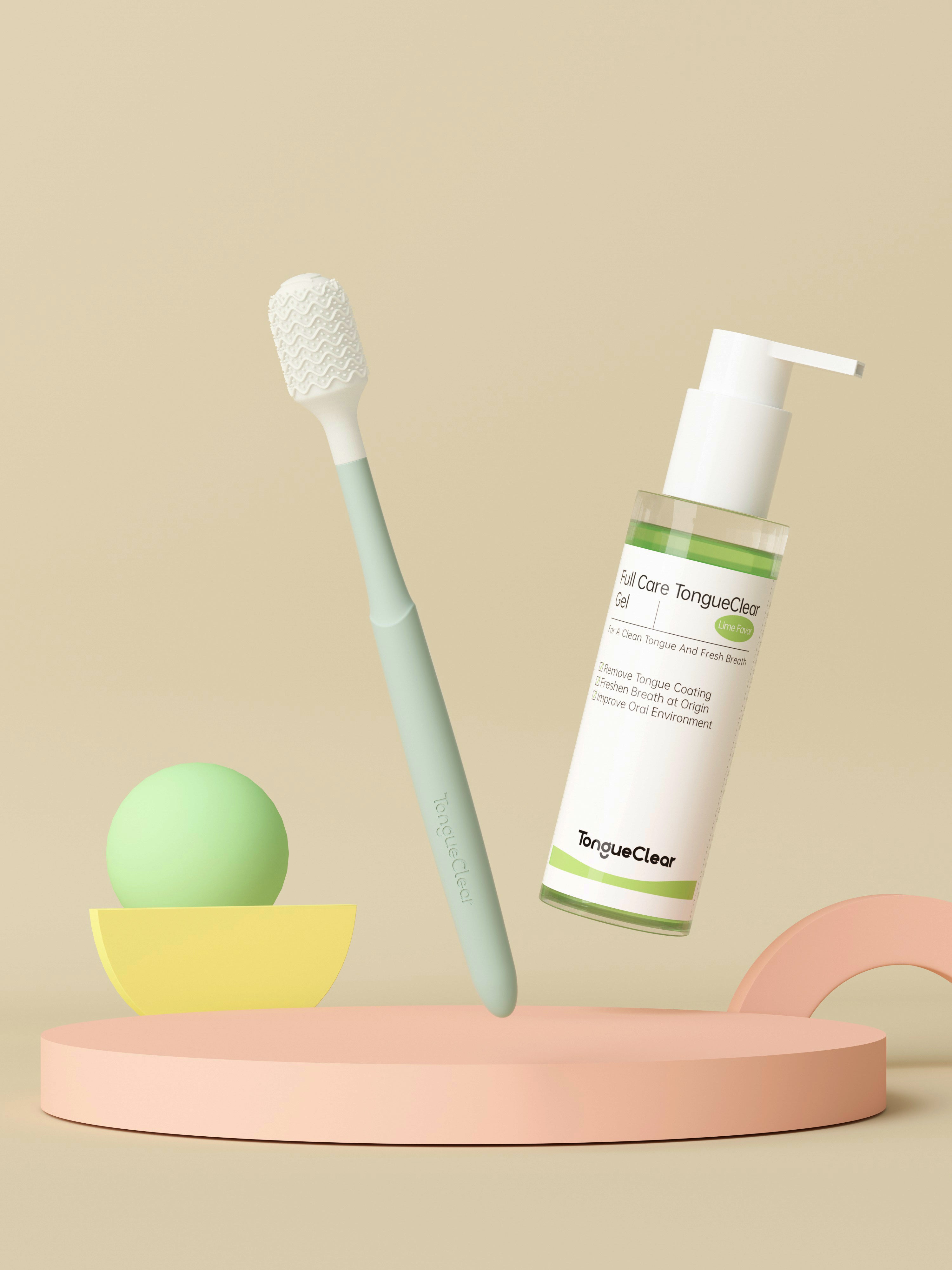
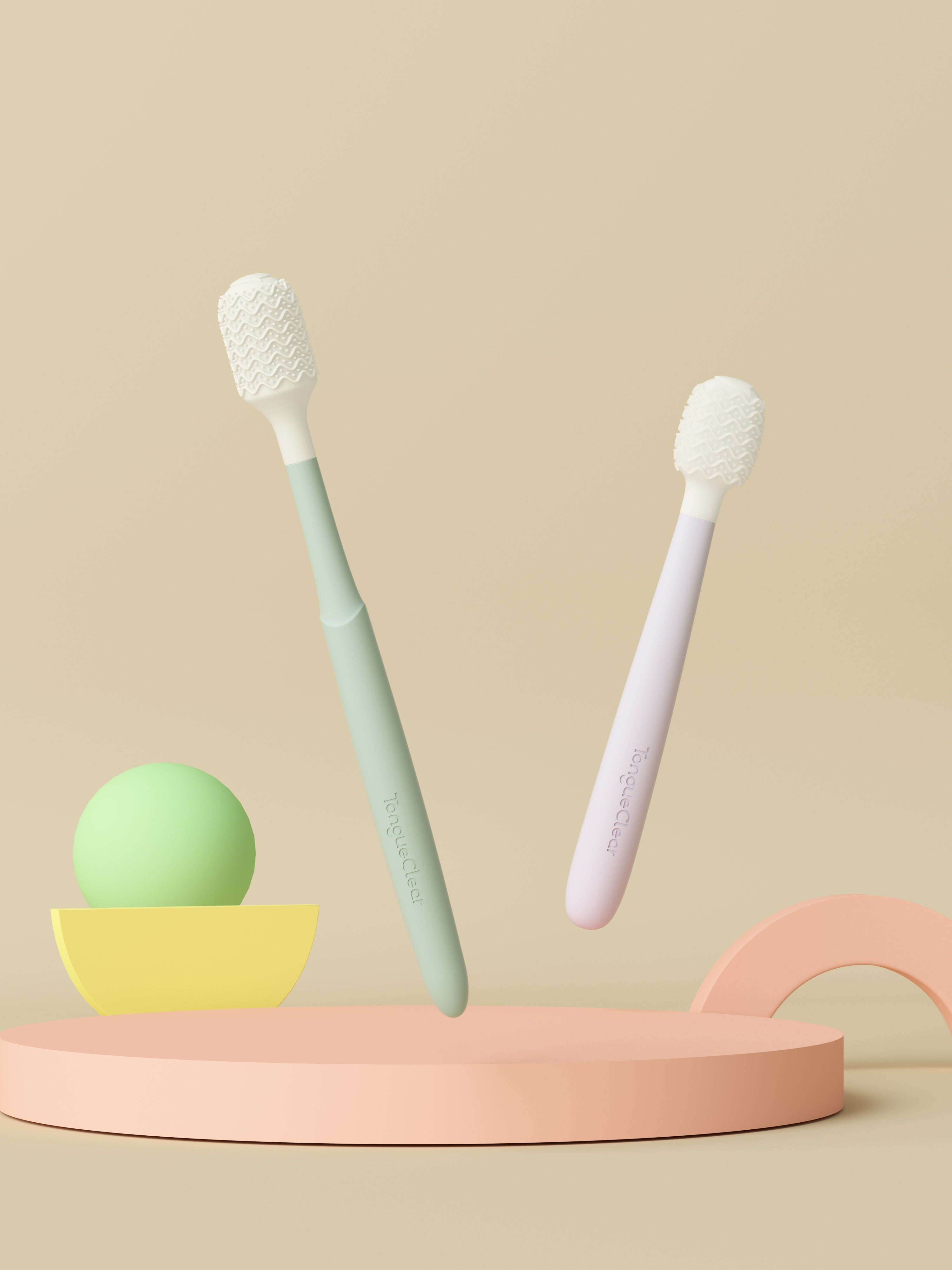
When you clean your mouth in the morning, this isn't just an ordinary brush; it's designed to reach the "invisible" blind spots. Once the Airbag Oral Brush enters your mouth, it goes to work:
By simply twisting the handle, the brush head adaptively deforms to fit different areas of the mouth.

At the same time, It also effectively helps clean areas associated with tonsil stone buildup.

The multi-layer 3D wave texture, combined with its Air-Cushion Design, conforms to various surfaces—like the gumline edge, the uneven tongue, the teeth, and the inner cheeks. Through a gentle physical sweeping motion, it helps lift and remove oral biofilms and daily residue. Since the mouth serves as the shared gateway to both the digestive and respiratory tracts, maintaining daily hygiene in this area is essential for a fresher, more comfortable oral environment.

Many traditional mouthwashes rely on harsh chemicals and an intense cooling sensation. While your mouth might feel temporarily "clean," these products can actually disrupt your mouth's natural microbiome balance, leaving your oral tissues drier and more sensitive—which ultimately makes bad breath more likely to return.
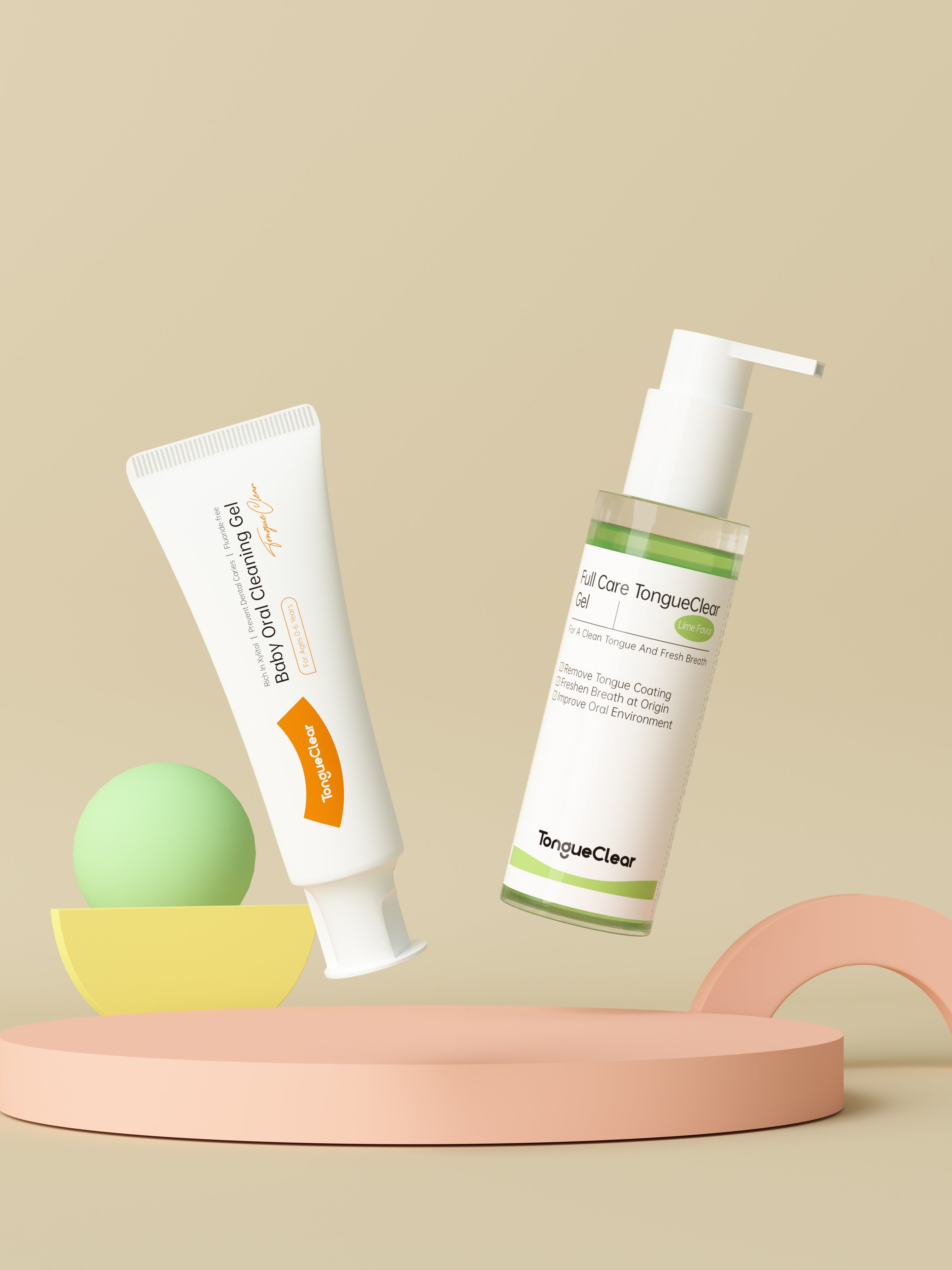
The TongueClear Oral Cleaning Gel takes a completely different approach:
The entire cleaning experience is remarkably gentle and comfortable, yet it thoroughly covers those easily neglected areas of your mouth. It truly tackles odor right at the source, leaving your breath naturally fresh and your mouth perfectly balanced.
We invited 12 participants for a small-scale oral hygiene observation. Before the test, all participants had their baseline oral state recorded following a standardized procedure to visually compare the performance of different cleaning methods.

On the fifth day, we visually documented the baseline distribution of oral biofilms as a pre-cleaning reference.

Subsequently, the 12 participants were divided into 4 groups of 3. Each group used one of the following daily cleaning routines:

Following the test period, we compared the cleaning outcomes across several oral areas through close-up visual inspection.

We also conducted a freshness check for all four groups. After participants kept their mouths closed for 3 minutes, freshness impressions were recorded to compare changes before and after cleaning.

After using TongueClear for a while, changes sometimes become noticeable only after they occur.
Perhaps when a family member is close by and talking, they might casually ask, "Did you just brush your teeth?"
It might also be that a friend leaned in a little too close during a chat and said, "Have you changed toothpaste recently? Everything feels really fresh."
They are unaware that you've used TongueClear and won't analyze your breath seriously.
People close to you usually don't deliberately use flattering tones, but they can sense it—the conversations may feel smoother and more natural when they speak to you.
It's not an overpowering mint flavor, nor is it about masking something with fragrance. Instead, it offers a subtle, clean, and refreshing sensation. After drinking coffee, eating, or chatting for a long time, it doesn't easily leave your mouth feeling dull or sticky.
You will gradually realize that what truly makes people relax is not the exaggerated words spoken by others, but the fact that close-up conversations may feel more natural as part of a fresher routine.

Let’s see what our community has to say.

TongueClear wants users to experience our products with complete peace of mind:

Breath freshness is a frequently overlooked aspect of daily oral care. Many people opt for intensely strong mouthwashes or brush their teeth more frequently just to get a fleeting burst of freshness. However, if your cleaning routine only stops at the surface of the teeth, biofilms and daily buildup can still linger in other areas of the mouth.
When you expand your cleaning routine from just "the teeth" to the "entire mouth"—including the tongue, gumline, roof of the mouth, inner cheeks, and the back of the throat—that clean, refreshing feeling becomes much easier to maintain. The next time you open your mouth to speak, a fresh, clean, and comfortable oral state will be a natural part of your everyday confidence.